

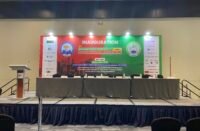

Beacon 2026 brought government leaders, maritime professionals, business executives, international investors, and industry organizations together from September 29 to 30, 2026, at the SMX Convention Center Manila in Pasay City. Organized by The Maritime League Inc., the event marked the third edition of the Blue Economy Annual Trade and Conference. Under the theme “Empowering Maritime Excellence: Advancing a Sustainable Blue Economy,” it provided a national platform for discussing how the Philippines can strengthen its maritime industries while protecting and sustainably managing its ocean and coastal resources.
The conference and exhibition connected sectors that are vital to the country’s maritime future, including shipbuilding, ship repair, domestic shipping, logistics, seafaring, and marine engineering. By bringing these fields together, Beacon 2026 encouraged participants to consider how coordinated policies, investment, and industry partnerships could support economic growth, improve maritime services, and create opportunities for Filipino workers. The event also highlighted the importance of balancing commercial development with environmental stewardship and maritime security.
Government agencies, defense forces, and private-sector organizations played a central role in the gathering. Key participating institutions included the Philippine Navy, Philippine Coast Guard, Department of Science and Technology, and Board of Investments. Their involvement reflected the broad range of interests connected to the blue economy, from national maritime capabilities and research to investment and sustainable industry development. The program also brought together major industry participants, including transport and logistics operators 2GO and One Maritime Group, whose network spans shipbuilding, classification, shipping operations, and maritime services.
A major focus of the discussions was strengthening the safety, efficiency, and sustainability of maritime operations. Industry representatives explored issues such as vessel safety, modern supply chain management, green-fleet transformation, and practical training for the maritime workforce. These conversations recognized that developing a competitive maritime sector requires more than investment in vessels and infrastructure: it also depends on skilled workers, reliable logistics, effective standards, and collaboration among public and private organizations.
Beacon 2026’s program featured a series of specialized conferences and forums. Among them were the Phil Shipcon Conference, the MSI Second Shipbuilding and Ship Repair Convention, the third Korea–Philippines Marine Mobility Forum, and the Maritime Industry Authority’s Sixth Marine Environment Protection Forum. The Korea–Philippines forum included participation from 30 Korean engineering firms, creating opportunities to exchange expertise and explore potential cooperation in marine mobility and engineering. Other sessions addressed vessel safety, maritime services, and environmental protection, giving participants space to share perspectives on challenges facing the industry.
Workforce development was another important part of the event. The Beaconers Maritime Job Fair, held in partnership with the Department of Migrant Workers, aimed to connect Filipino seafarers, marine engineers, and logistics workers with domestic and international employers. By bringing job seekers and companies together, the fair supported the development of a skilled maritime workforce and helped participants learn about career opportunities across the sector. The program also recognized professional achievement with the presentation of the “Best Chief Superintendent of the Year” award.
Networking and partnership-building continued throughout the three-day gathering, culminating in a networking and awards day at the Manila Yacht Club on October 1. The closing activities gave attendees, exhibitors, and investors an opportunity to continue conversations, strengthen professional relationships, and explore future collaborations beyond the conference sessions.
Across its exhibitions, forums, and workforce activities, Beacon 2026 emphasized that progress in the Philippine maritime sector depends on sustained cooperation. By convening government, industry, defense, academia, and the workforce, the event created a setting for discussing shared priorities and potential solutions. Its program reinforced the role of maritime partnerships in advancing a more connected, capable, and sustainable Philippine blue economy.